Search Results for: sermorelin

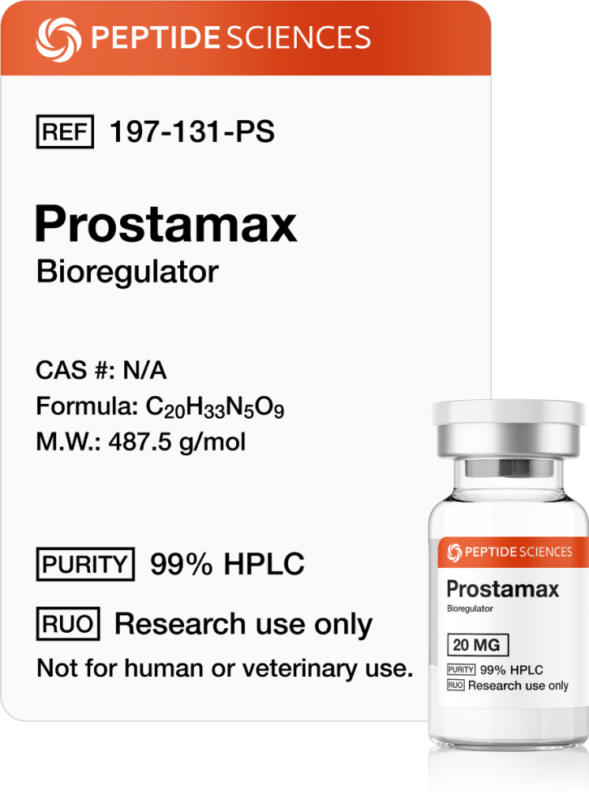
Prostamax 20mg (Bioregulator)

Prostamax 20mg (Bioregulator)

Prostamax is a peptide bioregulator derived from prostate tissue extracts that modulates peptide-mediated regulation of cell differentiation and proliferation. Experimental studies indicate its effects on gene expression associated with epithelial integrity and endocrine feedback. Prostamax is used in molecular biology and reproductive research focusing on peptide regulation of glandular function.

For research use only. Not for human consumption.

References:
Linkova NS et al., Biogerontology, 2014;15(2):161–170
Morozov VG et al., Mech Ageing Dev, 1997;96(1–3):123–132
Anisimov VN et al., Arch Gerontol Geriatr, 2017;71:142–146
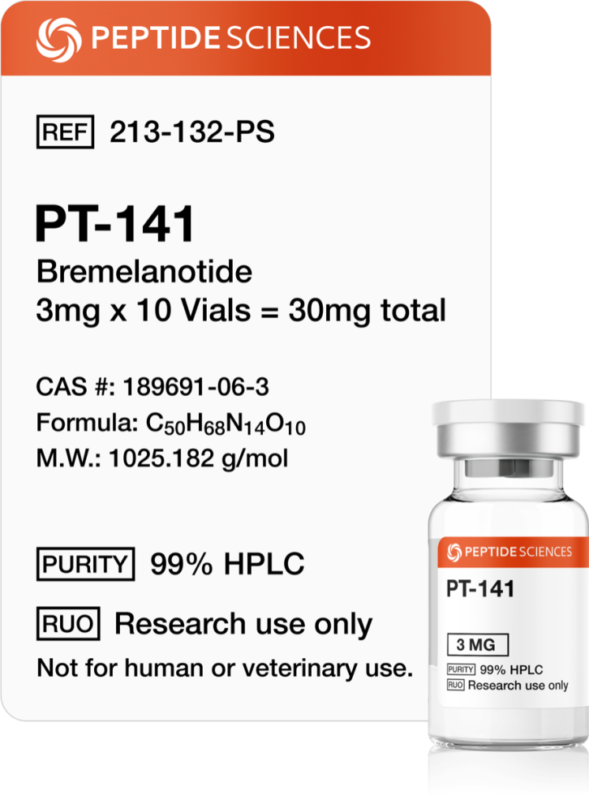
PT-141 (3mg x 10 Vials = 30mg)

PT-141 (3mg x 10 Vials = 30mg)

PT-141 (Bremelanotide) is a synthetic research peptide derived from alpha-melanocyte-stimulating hormone (α-MSH) and engineered for enhanced stability and receptor selectivity. It functions as an agonist of melanocortin receptors, primarily MC4R and MC1R, activating central melanocortin signaling pathways involved in neuroendocrine regulation, autonomic response modulation, and immune-related signaling in experimental models. PT-141 is utilized in research investigating melanocortin receptor pharmacology, central nervous system peptide signaling, and neuroimmune pathway modulation. 

For research use only. Not for human consumption. 

References: 
Hadley ME et al., Peptides, 1996 17(4):593–596 
Hruby VJ et al., J Med Chem, 2003 46(25):5252–5263 
Kingsberg SA et al., J Sex Med, 2007 4(3):628–638


Rigin 200mg (Palmitoyl Tetrapeptide-7) (Topical)

Rigin 200mg (Palmitoyl Tetrapeptide-7) (Topical)

Rigin (Palmitoyl Tetrapeptide-7) is a research peptide composed of Gly-Gln-Pro-Arg conjugated to palmitic acid, designed to modulate cytokine expression and dermal peptide signaling. It has been shown in preclinical research to influence extracellular matrix metabolism and cellular communication through interleukin and integrin pathways. Rigin is utilized in studies of peptide-mediated skin homeostasis and tissue remodeling.

For research use only. Not for human consumption.

References:
Katayama K et al., J Biochem, 2010 147(1):61–69
Pennefather PM et al., Exp Dermatol, 2012 21(7):512–518
Zhang L et al., Int J Cosmet Sci, 2020 42(3):302–310

Semax 30mg

Semax 30mg

Semax is a synthetic heptapeptide (Met-Glu-His-Phe-Pro-Gly-Pro) derived from the ACTH(4-10) fragment. It is widely utilized in research investigating neurotrophic and nootropic signaling via modulation of BDNF, TrkB, and neurogenic transcription factors such as NGF and GAP-43. Experimental data indicate its capacity to affect redox balance, neuronal plasticity, and dopaminergic regulation in central nervous system models.

For research use only. Not for human consumption.

References: 
Ashmarin IP et al., Neurosci Behav Physiol, 1998 28(3):341-348 
Ashmarin IP et al., Neurochem J, 2005;39(1):36–44
Dolotov OV et al., Brain Res Bull, 2011 85(5):327-332

MOTS-c 5mg

MOTS-c 5mg

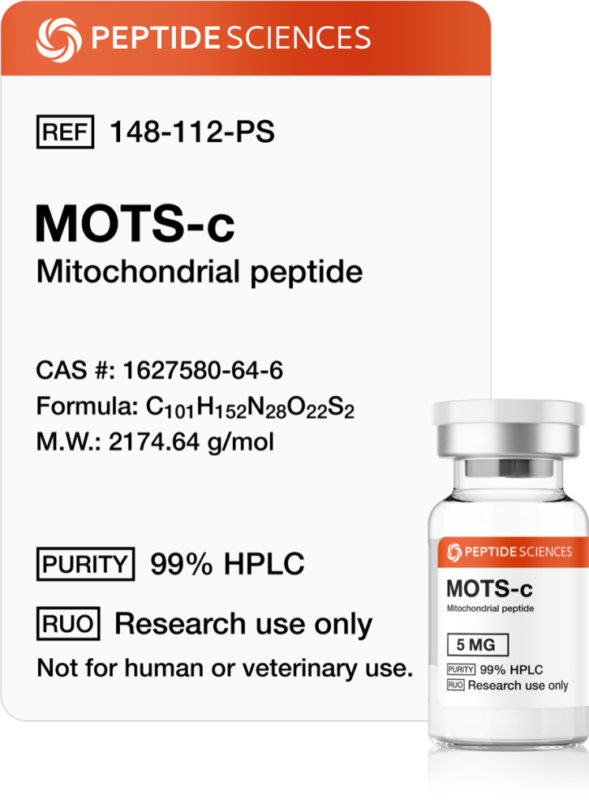
MOTS-c is a research peptide derived from mitochondria and composed of 16 amino acids (Met-Arg-Trp-Gln-Glu-Met-Gly-Tyr-Ile-Phe-Tyr-Pro-Arg-Lys-Leu-Arg). Encoded within the mitochondrial 12S rRNA gene, it regulates cellular metabolism through AMPK activation and mitochondrial homeostasis in preclinical studies. MOTS-c is widely used in metabolic and aging research investigating mitochondrial signaling, stress adaptation, and energy regulation mechanisms.

For research use only. Not for human consumption.

References:
Lee C et al., Cell Metab, 2015;21(3):443–454
Kim KH et al., Nat Commun, 2018;9(1):4774
Lee C et al., Cell Metab, 2016;23(2):303–309

N-Acetyl Epithalon Amidate 20mg

N-Acetyl Epithalon Amidate 20mg

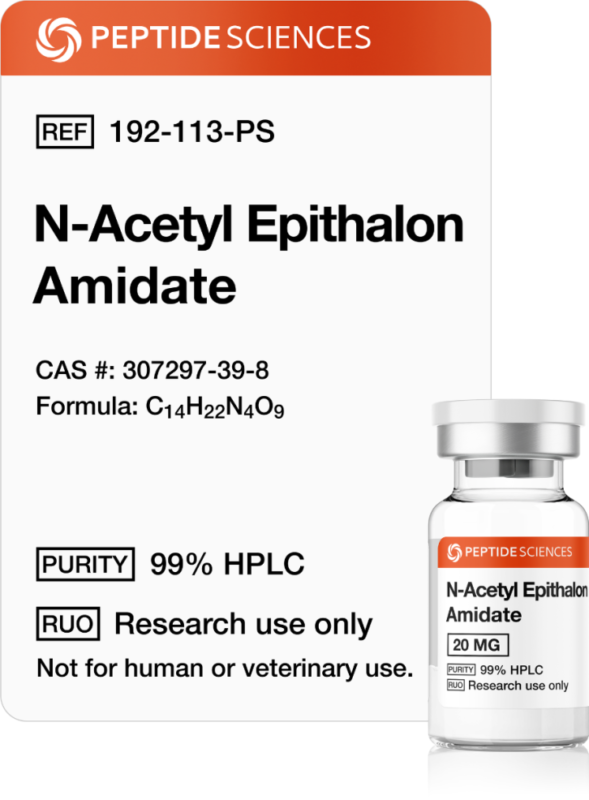
N-Acetyl Epithalon Amidate is a stabilized analog of the pineal-derived tetrapeptide Epitalon (Ala-Glu-Asp-Gly) modified for enhanced bioavailability. It is studied for its influence on telomerase activation, circadian gene regulation, and oxidative stress response. N-Acetyl Epithalon Amidate is used in molecular biology research exploring genomic stability and epigenetic longevity pathways.

For research use only. Not for human consumption.

References:
Khavinson VK et al., Bull Exp Biol Med, 2003 135(4):429–432
Arutyunyan AV et al., Adv Gerontol, 2005 15(3):28–36
Anisimov VN et al., Neuro Endocrinol Lett, 2003 24(3–4):233–240

N-Acetyl Selank Amidate 10mg

N-Acetyl Selank Amidate 10mg

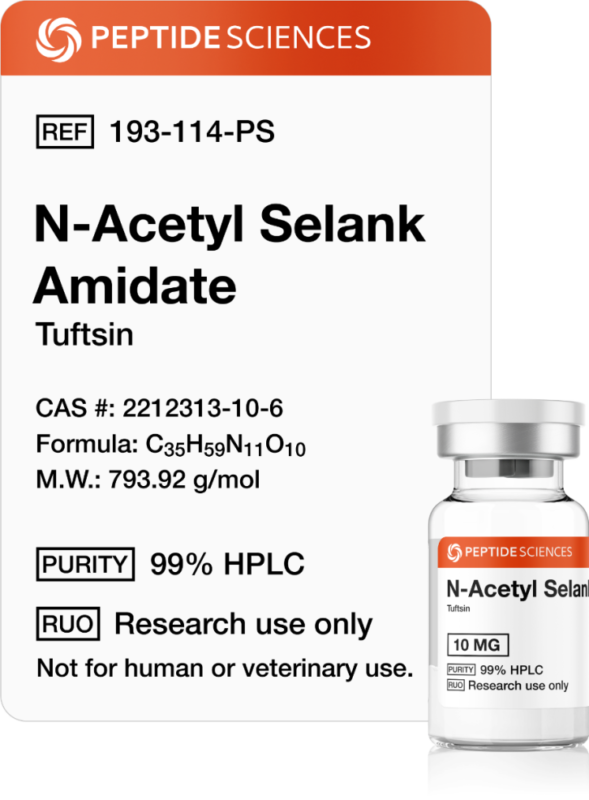
N-Acetyl Selank Amidate is a stabilized analog of the synthetic research peptide Selank, derived from the natural tuftsin sequence. It modulates neuropeptide and cytokine signaling through regulation of GABAergic transmission, BDNF expression, and IL-6 pathways. N-Acetyl Selank Amidate is used in studies investigating neuroimmune modulation, stress adaptation, and peptide-mediated synaptic regulation.

For research use only. Not for human consumption.

References:
Ashmarin IP et al., Neurosci Behav Physiol, 2005;35(6):521–530
Inozemtseva LS et al., Bull Exp Biol Med, 2008 146(6):620–623
Kolomin T et al., Mol Neurobiol, 2016 53(9):6340–6350

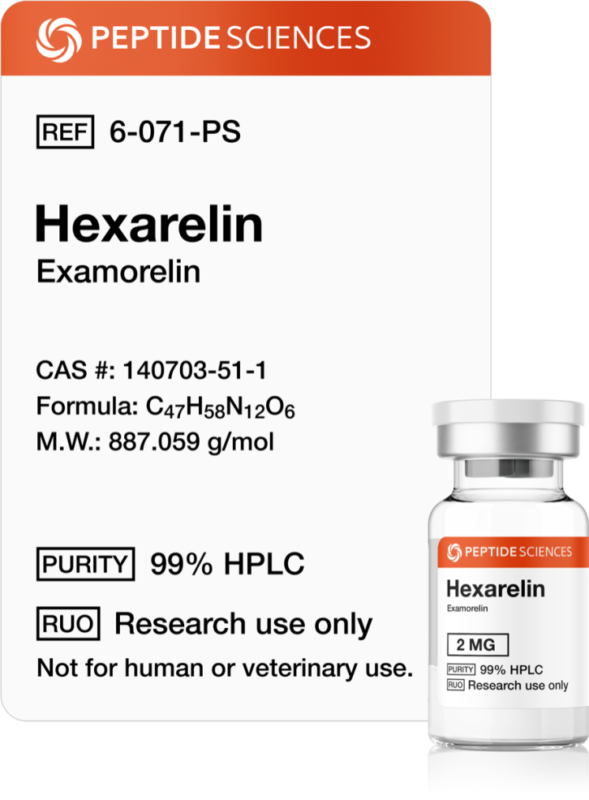
Hexarelin 2mg

Hexarelin 2mg

Hexarelin is a synthetic hexapeptide growth hormone secretagogue and ghrelin receptor (GHS-R1a) agonist used in experimental models to study somatotropic and cardiovascular peptide signaling. In preclinical research, Hexarelin activates Gq/PLC-dependent calcium signaling pathways involved in growth hormone release while also engaging cardioprotective and metabolic mechanisms independent of GH secretion. Experimental studies have investigated its role in myocardial protection during ischemic stress, skeletal muscle preservation, and lipid metabolism regulation through peptide-mediated endocrine and paracrine signaling pathways. Hexarelin is utilized as a research tool in studies of cardiac peptide pharmacology, muscle metabolism, and ghrelin receptor biology. 

For research use only. Not for human consumption. 

References: 
Camanni F et al., J Endocrinol Invest, 1998 21(9):646–654 
Broglio F et al., J Clin Endocrinol Metab, 1999 84(9):3276–3280 
Ghigo E et al., Eur J Endocrinol, 2001 145(1):1–10

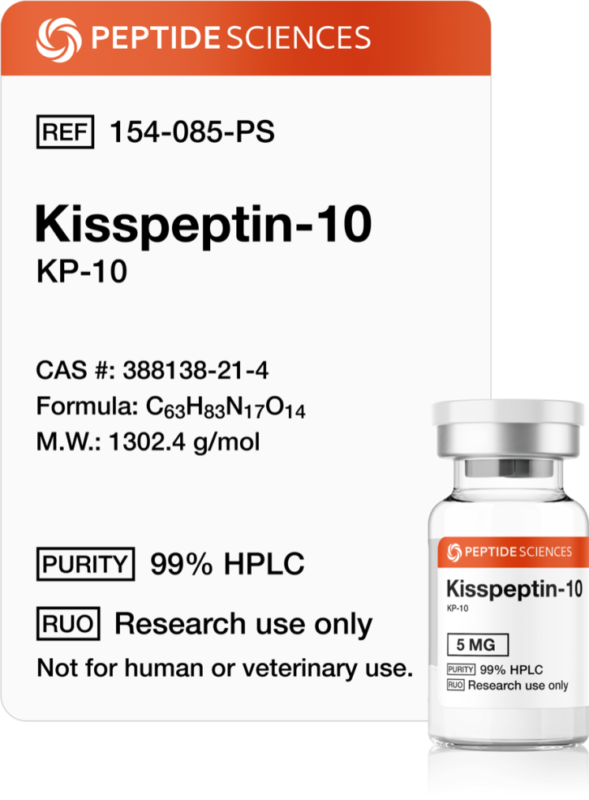
Kisspeptin-10 5mg

Kisspeptin-10 5mg

Kisspeptin-10 is a synthetic decapeptide (Tyr-Asn-Trp-Asn-Ser-Phe-Gly-Leu-Arg-Phe-NH₂) corresponding to the active fragment of the KISS1 gene product. It binds to the GPR54 (KISS1R) receptor, activating Gq-mediated signaling cascades and modulating gonadotropin-releasing hormone (GnRH) expression in preclinical studies. Kisspeptin-10 serves as a tool for exploring reproductive and neuroendocrine peptide signaling.

For research use only. Not for human consumption.

References: 
Kotani M et al., J Biol Chem, 2001 276(37):34631–34636
Oakley AE et al., Endocr Rev, 2009 30(6):713–743
de Roux N et al., N Engl J Med, 2003 349(17):1614–1627

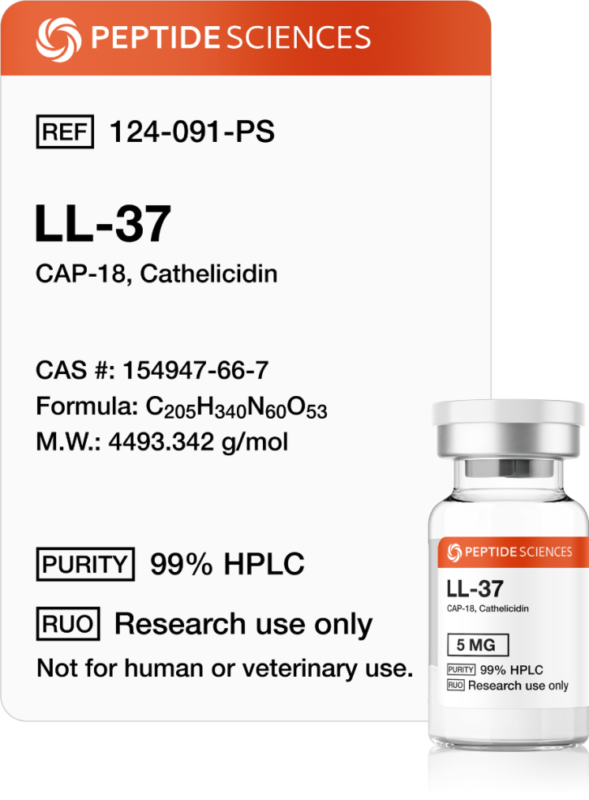
LL-37 5mg (CAP-18)

LL-37 5mg (CAP-18)

LL-37 is a cationic α-helical research peptide derived from the C-terminal region of human cathelicidin (hCAP18). It exhibits broad-spectrum antimicrobial and immunomodulatory activity in preclinical studies, acting via membrane disruption and modulation of TLR/NF-κB pathways. LL-37 is widely used in microbiology and immunology research investigating host defense peptides and innate immune signaling.

For research use only. Not for human consumption.

References: 
Dürr UH et al., Biochim Biophys Acta, 2006 1758(9):1408–1425
Zanetti M et al., J Leukoc Biol, 2004 75(1):39–48
Vandamme D et al., Cell Mol Life Sci, 2012 69(2):210–227