Search Results for: sermorelin

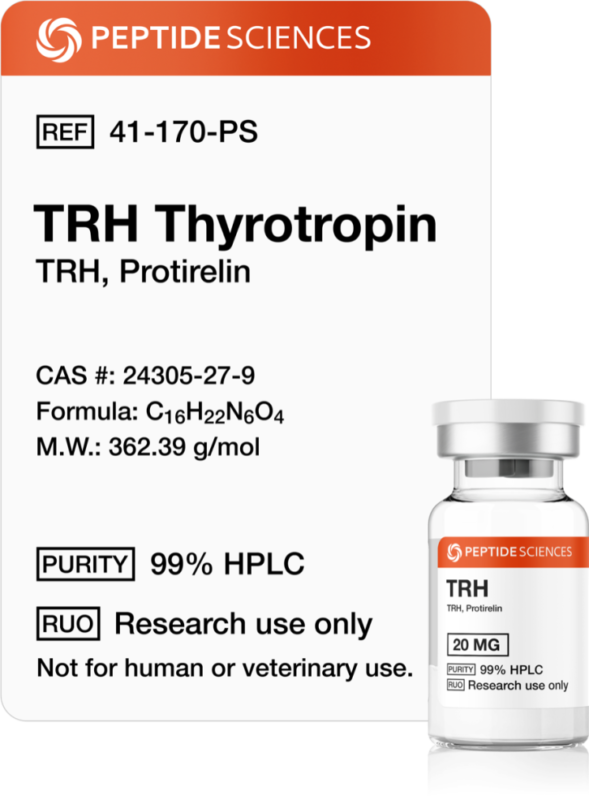
TRH Thyrotropin (Protirelin) 50mg

TRH Thyrotropin (Protirelin) 50mg

Thyrotropin releasing hormone (TRH or Protirelin) is a research peptide consisting of the tripeptide sequence pGlu-His-Pro-NH₂. It functions as a hypothalamic regulatory peptide that modulates pituitary secretion of thyrotropin (TSH) and prolactin through activation of the TRH receptor, a Gq-coupled GPCR. This interaction stimulates phospholipase C, IP₃, and intracellular Ca²⁺ signaling cascades involved in pituitary–thyroid axis regulation. TRH is utilized in preclinical studies of neuroendocrine feedback, receptor coupling, and second-messenger signal transduction.

For research use only. Not for human consumption.

References:
Lechan RM & Fekete C, Physiol Rev, 2004;84(1):109-134
Joseph-Bravo P et al., J Endocrinol, 2015;226(2):T85
Trubacova R et al., Front Cell Dev Biol, 2022;10:981452
Triptorelin (GnRH) 2mg

Triptorelin (GnRH) 2mg

Triptorelin is a synthetic decapeptide analog of gonadotropin-releasing hormone (GnRH; pGlu-His-Trp-Ser-Tyr-D-Trp-Leu-Arg-Pro-Gly-NH₂). It binds to the GnRH receptor, initiating Gq/PLC and IP₃–Ca²⁺ signaling cascades that regulate luteinizing and follicle-stimulating hormone release in experimental systems. Triptorelin is used in receptor biology and endocrine regulation research to study hypothalamic–pituitary–gonadal axis modulation.

For research use only. Not for human consumption.

References:
Sandow J et al., Life Sci, 1984 35(15):1503–1513
Conn PM et al., Endocr Rev, 1994 15(6): 682–715
Limonta P et al., J Steroid Biochem Mol Biol, 2003 85(2–5): 249–258

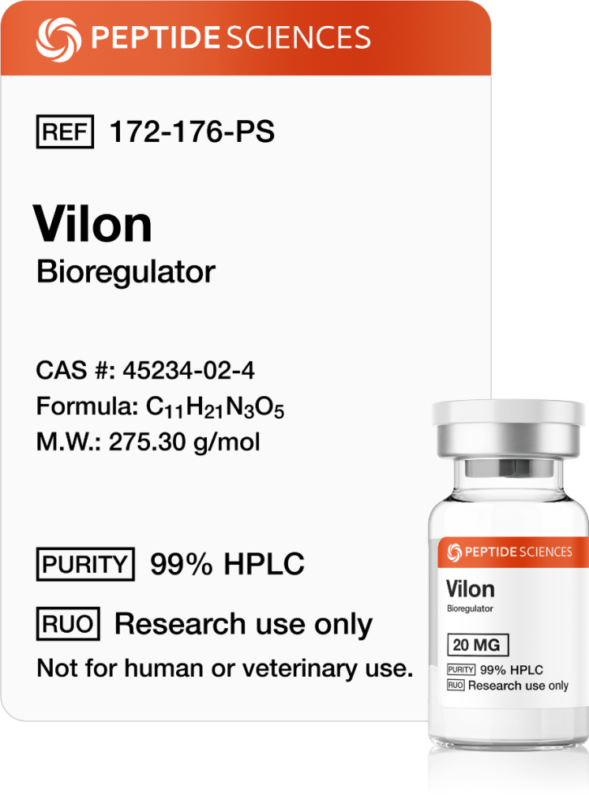
Vilon 20mg (Bioregulator)

Vilon 20mg (Bioregulator)

Vilon is a short research peptide (Lys-Glu) derived from thymic extracts and known for its role in gene expression modulation studies. It has demonstrated activity in regulating chromatin structure, protein synthesis, and cell cycle homeostasis. Research indicates that Vilon may influence regulatory peptides involved in tissue differentiation and aging processes, providing a foundation for investigations in peptide bioregulation.

For research use only. Not for human consumption.

References: 
Khavinson VK et al., Bull Exp Biol Med, 2010;149(4):462–465
Anisimov VN et al., Biogerontology, 2010;11(2):139–149
Linkova NS et al., Biogerontology, 2014;15(2):161–170

VIP 6mg

VIP 6mg

VIP (Vasoactive Intestinal Peptide) is a 28 amino acid neuropeptide that functions as a potent endogenous ligand for VPAC1 and VPAC2 receptors. It activates cAMP-dependent signaling cascades regulating smooth muscle relaxation, vasodilation, and immune modulation in preclinical studies. VIP is widely used in research examining neuroendocrine signaling, inflammatory regulation, and peptide-mediated vascular homeostasis.

For research use only. Not for human consumption.

References:
Gozes I et al., Front Endocrinol (Lausanne), 2017 8:282
Laburthe M et al., Biochim Biophys Acta, 2007 1768(4):955–972
Delgado M et al., Trends Mol Med, 2004 10(4):201–208

SLU-PP-332 (250mcg x 60 Capsules = 15,000mcg)

SLU-PP-332 (250mcg x 60 Capsules = 15

SLU-PP-332 is a small-molecule research compound identified as a selective agonist of peroxisome proliferator-activated receptor delta (PPARδ). It enhances fatty acid oxidation, mitochondrial biogenesis, and metabolic efficiency in preclinical models by modulating PPARδ-dependent gene expression. SLU-PP-332 is utilized in metabolic and mitochondrial research examining lipid metabolism, endurance signaling, and energy regulation mechanisms.

References:
Narkar VA et al., Cell, 2008;134(3):405–415
Fan W et al., J Biol Chem, 2004;279(7):5241–5248
Billon C et al., Cell Metab, 2022;34(1):69–84

These capsules are provided exclusively as inert containers for the dry transport, storage, and handling of laboratory research materials. They are not dosage forms and are not intended for ingestion or administration. They must not be used as drug delivery systems, consumed, or administered in any form. For Research Use Only: Not for use in humans or animals. Not for diagnostic or therapeutic purposes.

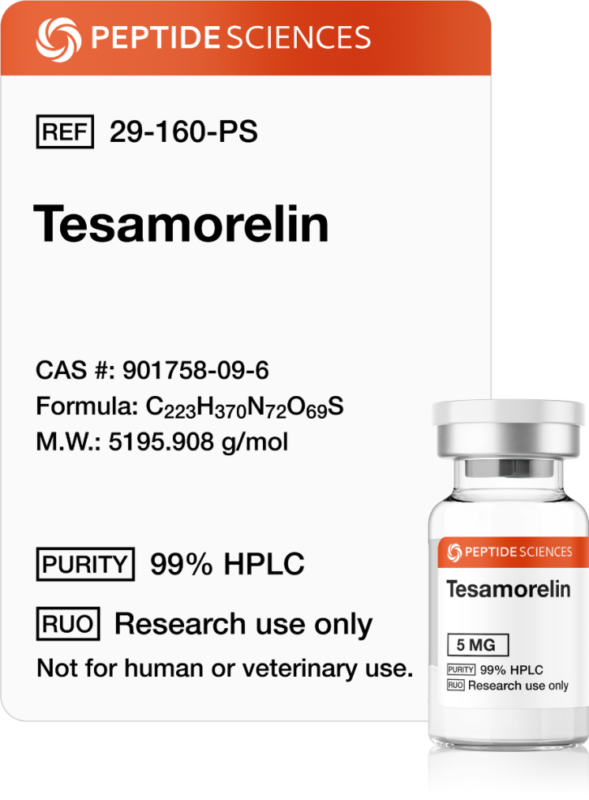
Tesamorelin 2mg (10 Vial Kit)

Tesamorelin 2mg (10 Vial Kit)

Tesamorelin is a synthetic research peptide and stabilized analog of growth hormone–releasing hormone (GHRH) designed to selectively activate the GHRH receptor and stimulate endogenous growth hormone secretion in experimental models. Preclinical and clinical research has focused on its role in modulating somatotropic signaling, lipid metabolism, and visceral adipose regulation through cAMP-dependent pituitary pathways. Tesamorelin is utilized in research investigating hypothalamic–pituitary axis dynamics, metabolic signaling, neuroendocrine regulation, and growth hormone–mediated tissue effects. 

For research use only. Not for human consumption. 

References: 
Falutz J et al., N Engl J Med, 2010 363(6):528–539 
Stanley TL et al., J Clin Endocrinol Metab, 2011 96(6):E1022–E1032 
Grinspoon SK et al., J Clin Endocrinol Metab, 2014 99(11):4099–4107

Tesofensine 500mcg (30 Capsules)

Tesofensine 500mcg (30 Capsules)

Tesofensine is a synthetic small-molecule research compound classified as a triple monoamine reuptake inhibitor of serotonin, norepinephrine, and dopamine. It modulates central appetite and metabolic signaling through presynaptic transporter inhibition and hypothalamic regulation in experimental models. Tesofensine is used in neuroendocrine and metabolic research investigating neurotransmitter dynamics, energy expenditure, and hypothalamic control mechanisms.

References:
Appel L et al., Neuropsychopharmacology, 2011 36(3):654–662
Astrup A et al., Lancet, 2008 372(9653):1906–1913
Eisenstein SA et al., J Pharmacol Exp Ther, 2015 352(1):129–138

These capsules are provided exclusively as inert containers for the dry transport, storage, and handling of laboratory research materials. They are not dosage forms and are not intended for ingestion or administration. They must not be used as drug delivery systems, consumed, or administered in any form. For Research Use Only: Not for use in humans or animals. Not for diagnostic or therapeutic purposes.

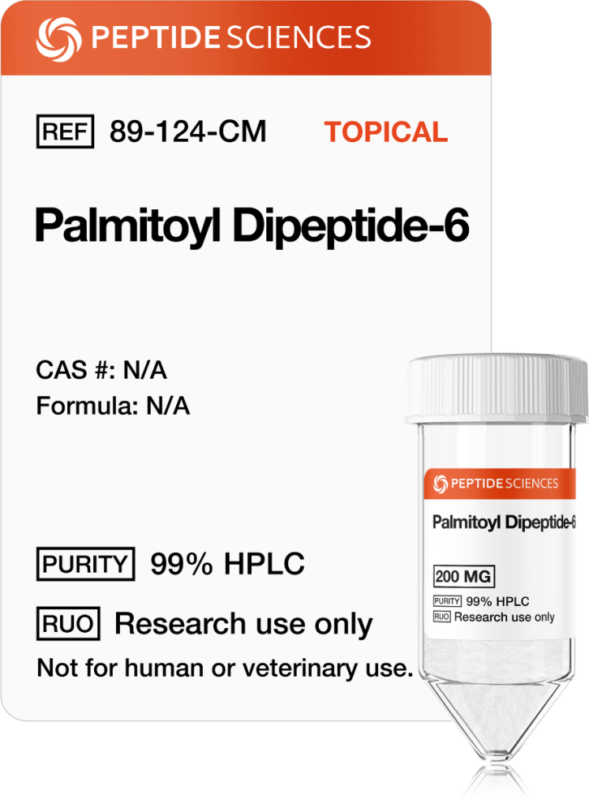
Palmitoyl Dipeptide-6 200mg (Topical)

Palmitoyl Dipeptide-6 200mg (Topical)

Palmitoyl Dipeptide-6 is a research peptide composed of a short dipeptide conjugated to a palmitic acid chain to enhance lipophilicity and dermal penetration. It has been studied for its ability to modulate fibroblast activity and extracellular matrix gene expression via TGF-β and integrin-associated signaling pathways. Preclinical data suggest its role in regulating collagen biosynthesis, cellular adhesion, and peptide-mediated communication in dermal and connective tissue models.

For research use only. Not for human consumption.

References:
Katayama K et al., J Biochem, 2010;147(1):61–69
Lintner K et al., Int J Cosmet Sci, 2005;27(3):183–190
Zhang L et al., Int J Cosmet Sci, 2020;42(3):302–310

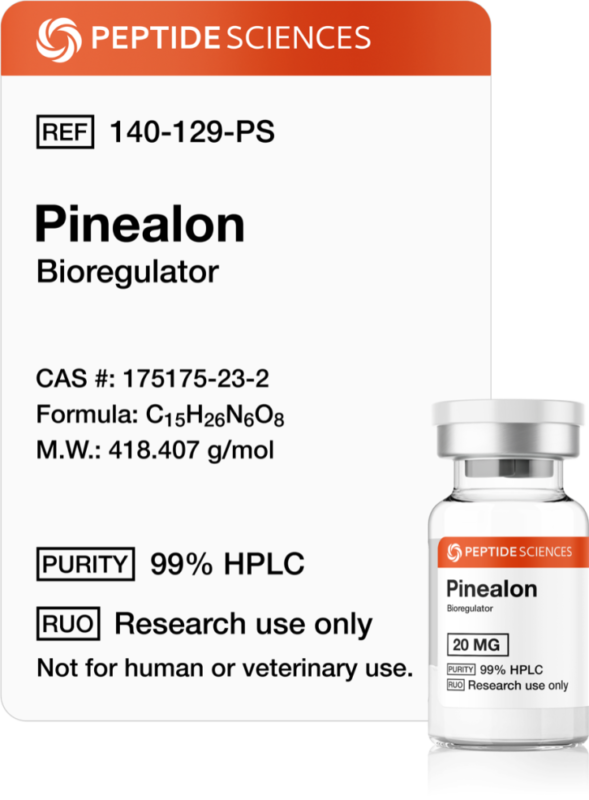
Pinealon 20mg (Bioregulator)

Pinealon 20mg (Bioregulator)

Pinealon is a synthetic tripeptide (Glu-Asp-Arg) that has been investigated for its potential to regulate neuronal differentiation and oxidative-stress responses. Preclinical models demonstrate its influence on mitochondrial enzyme activity, neuroprotective signaling, and gene expression linked to synaptic plasticity. Pinealon serves as a research model for understanding peptide-mediated control of energy metabolism and neural cell homeostasis.

For research use only. Not for human consumption.

References: 
Anisimov VN et al., Biogerontology, 2010;11(2):139–149
Linkova NS et al., Neurochem J, 2017 11(2):120-126
Trofimova SV et al., Adv Gerontol, 2015 28(3):432-439

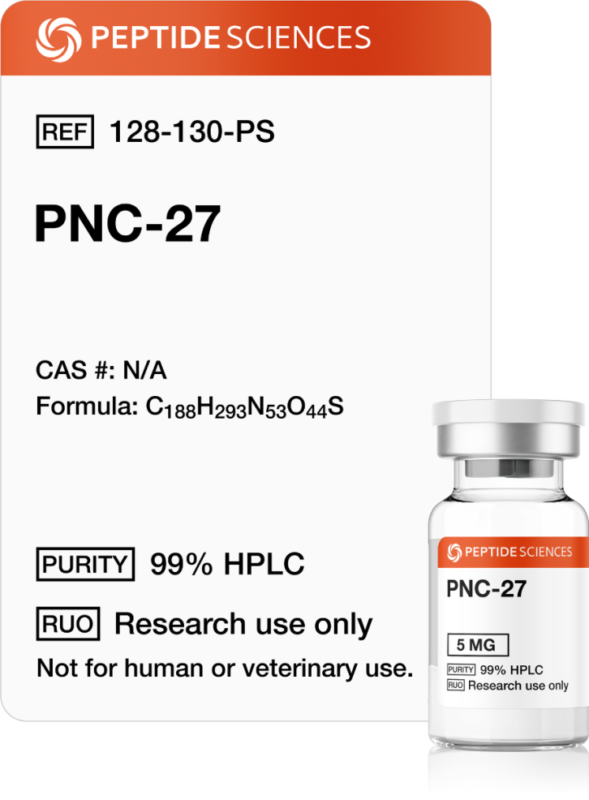
PNC-27 5mg

PNC-27 5mg

PNC-27 is a research peptide composed of a p53–MDM2 binding domain linked to a membrane-targeting sequence (residues 12–26 of the p53 protein). It has been shown in preclinical studies to interact with cancer cell membranes through HDM-2–associated mechanisms, leading to selective pore formation and membrane destabilization. PNC-27 is utilized in experimental oncology research to investigate peptide–membrane interactions, apoptotic signaling, and tumor-selective cytolytic activity in vitro.

For research use only. Not for human consumption.

References:
Sotomayor EM et al., Int J Cancer, 2005 115(5):701–709
Arora V et al., J Cell Biochem, 2013 114(3):664–671
Hu W et al., Oncotarget, 2017 8(29):47425–47436