Search Results for: sermorelin

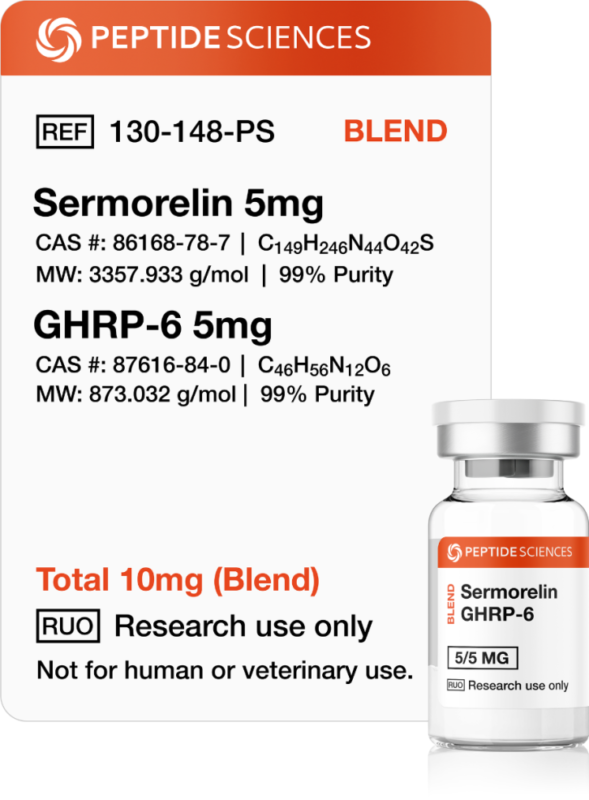
Sermorelin, GHRP-6, GHRP-2 9mg (Blend)

Sermorelin

Sermorelin, GHRP-6, and GHRP-2 is a research peptide blend combining three distinct growth hormone secretagogues that act synergistically on the hypothalamic–pituitary axis. Sermorelin (GHRH 1–29) stimulates GHRH receptor–mediated cAMP/PKA signaling, while GHRP-6 and GHRP-2 activate the ghrelin receptor (GHS-R1a) through Gq/11 and calcium-dependent pathways. This blend is utilized in endocrine and receptor biology research to study coordinated GH release, peptide–receptor crosstalk, and pulsatile secretion mechanisms.

For research use only. Not for human consumption.

References:
Bowers CY et al., Endocrinology, 1990 126(2):1165–1171
Frohman LA et al., Front Neuroendocrinol, 2002 23(3):257–291
Kojima M et al., Nature, 1999 402(6762):656–660
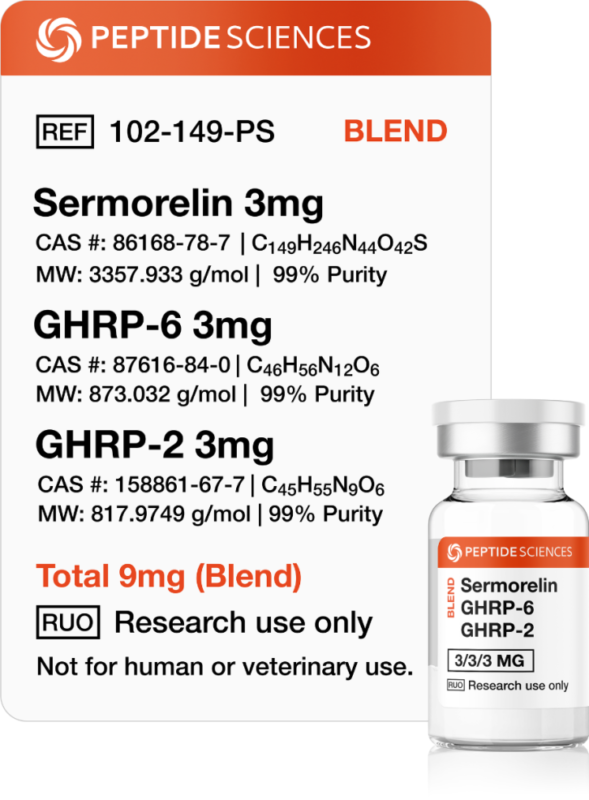
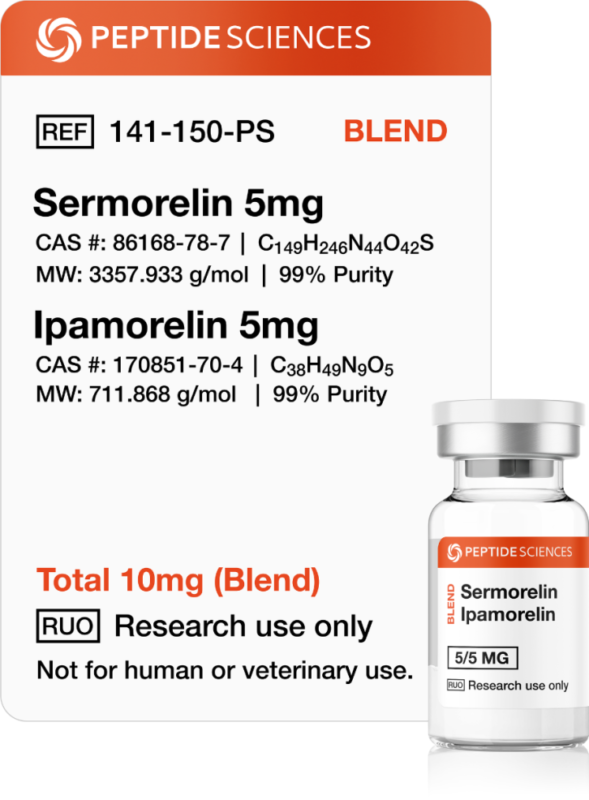
Sermorelin, Ipamorelin 10mg (Blend)

Sermorelin

Sermorelin and Ipamorelin is a research peptide blend that combines a GHRH analog with a ghrelin receptor agonist to examine growth hormone regulation. Sermorelin (GHRH 1–29) activates the GHRH receptor to increase cAMP/PKA signaling, while Ipamorelin stimulates GHS-R1a through Gq/11-coupled calcium flux. This blend is employed in preclinical models investigating endocrine peptide synergy, GH release kinetics, and hypothalamic–pituitary signaling mechanisms.

For research use only. Not for human consumption.

References:
Bowers CY et al., Endocrinology, 1990 126(2):1165–1171
Frohman LA et al., Front Neuroendocrinol, 2002 23(3):257–291
Kojima M et al., Nature, 1999 402(6762):656–660
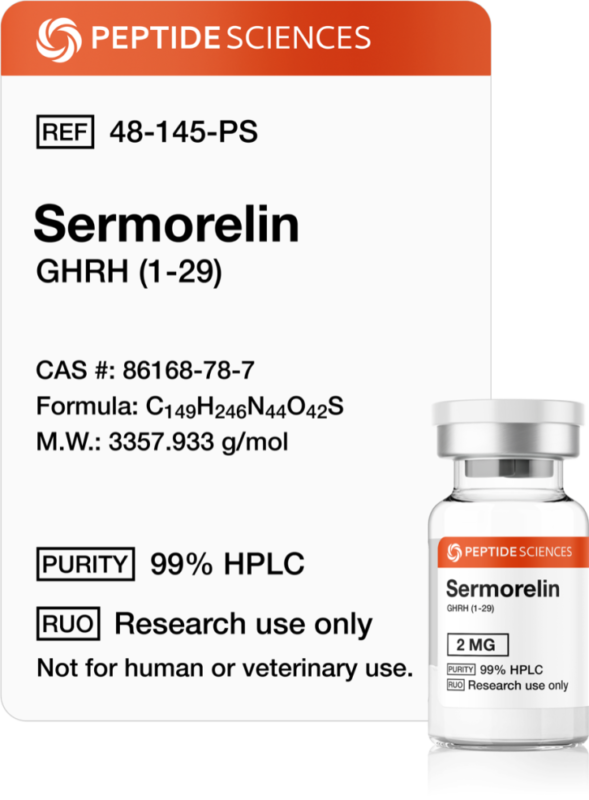
Sermorelin 2mg

Sermorelin 2mg

Sermorelin is a synthetic research peptide comprising the first 29 amino acids of growth hormone–releasing hormone (GHRH 1–44), representing its biologically active domain. It binds to the GHRH receptor on pituitary somatotrophs, activating adenylate cyclase and cAMP-dependent signaling to stimulate GH synthesis and release in preclinical models. Sermorelin is utilized in studies investigating hypothalamic–pituitary regulation, endocrine feedback, and somatotropic peptide signaling.

For research use only. Not for human consumption.

References:
Thorner MO et al., J Clin Endocrinol Metab, 1986 63(3):638–643
Frohman LA et al., Endocr Rev, 2001 22(6):606–648
Walker RF et al., Endocrinology, 1990 126(3):1527–1532

Sermorelin 5mg

Sermorelin 5mg

Sermorelin is a synthetic research peptide comprising the first 29 amino acids of growth hormone–releasing hormone (GHRH 1–44), representing its biologically active domain. It binds to the GHRH receptor on pituitary somatotrophs, activating adenylate cyclase and cAMP-dependent signaling to stimulate GH synthesis and release in preclinical models. Sermorelin is utilized in studies investigating hypothalamic–pituitary regulation, endocrine feedback, and somatotropic peptide signaling.

For research use only. Not for human consumption.

References:
Thorner MO et al., J Clin Endocrinol Metab, 1986 63(3):638–643
Frohman LA et al., Endocr Rev, 2001 22(6):606–648
Walker RF et al., Endocrinology, 1990 126(3):1527–1532

Sermorelin 15mg

Sermorelin 15mg

Sermorelin is a synthetic research peptide comprising the first 29 amino acids of growth hormone–releasing hormone (GHRH 1–44), representing its biologically active domain. It binds to the GHRH receptor on pituitary somatotrophs, activating adenylate cyclase and cAMP-dependent signaling to stimulate GH synthesis and release in preclinical models. Sermorelin is utilized in studies investigating hypothalamic–pituitary regulation, endocrine feedback, and somatotropic peptide signaling.

For research use only. Not for human consumption.

References:
Thorner MO et al., J Clin Endocrinol Metab, 1986 63(3):638–643
Frohman LA et al., Endocr Rev, 2001 22(6):606–648
Walker RF et al., Endocrinology, 1990 126(3):1527–1532


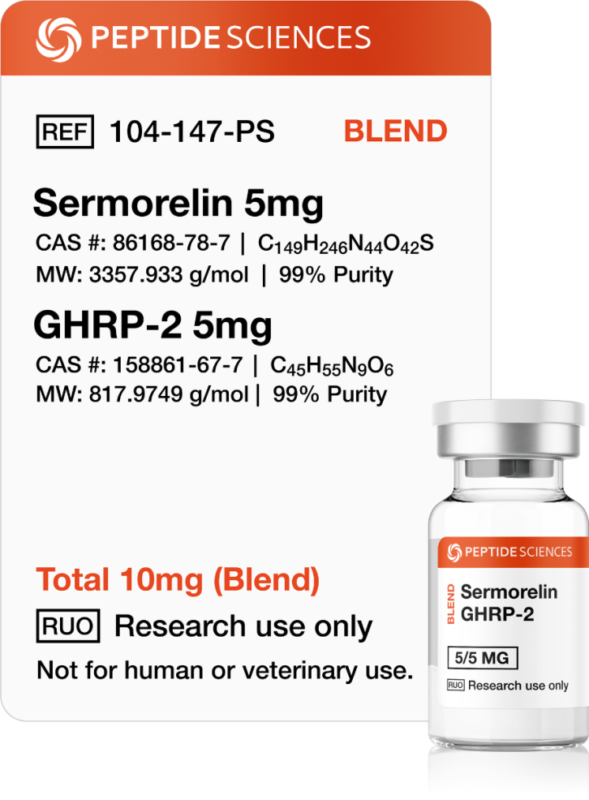
Sermorelin, GHRP-2 10mg (Blend)

Sermorelin

Sermorelin and GHRP-2 is a research peptide blend designed to investigate synergistic modulation of growth hormone secretion through complementary receptor pathways. Sermorelin (GHRH 1–29) activates the GHRH receptor, stimulating cAMP/PKA signaling and GH synthesis, while GHRP-2 acts as a ghrelin receptor (GHS-R1a) agonist, triggering Gq/11-mediated calcium influx. This dual mechanism provides a model for studying hypothalamic–pituitary coordination, endocrine peptide crosstalk, and feedback regulation in preclinical systems.

For research use only. Not for human consumption.

References:
Bowers CY et al., Endocrinology, 1990 126(2):1165–1171
Frohman LA et al., Front Neuroendocrinol, 2002 23(3):257–291
Kojima M et al., Nature, 1999 402(6762):656–660
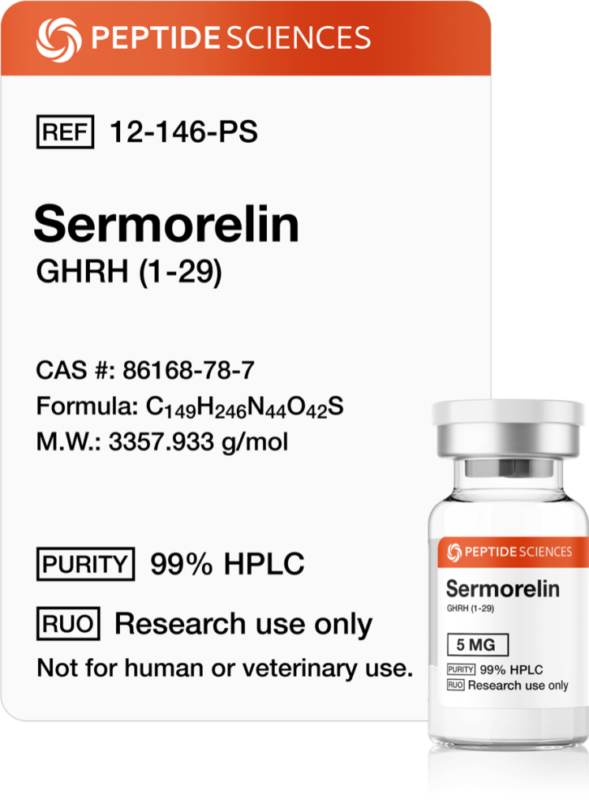
Sermorelin, GHRP-6 10mg (Blend)

Sermorelin

Sermorelin and GHRP-6 is a research peptide blend designed to investigate cooperative activation of GHRH and ghrelin receptor pathways in pituitary models. Sermorelin (GHRH 1–29) stimulates cAMP/PKA-mediated GH synthesis, while GHRP-6 acts on GHS-R1a through calcium mobilization and phospholipase C activation. The blend is used for preclinical studies of GH regulation, receptor synergy, and endocrine feedback signaling.

For research use only. Not for human consumption.

References:
Bowers CY et al., Endocrinology, 1990 126(2):1165–1171
Frohman LA et al., Front Neuroendocrinol, 2002 23(3):257–291
Kojima M et al., Nature, 1999 402(6762):656–660
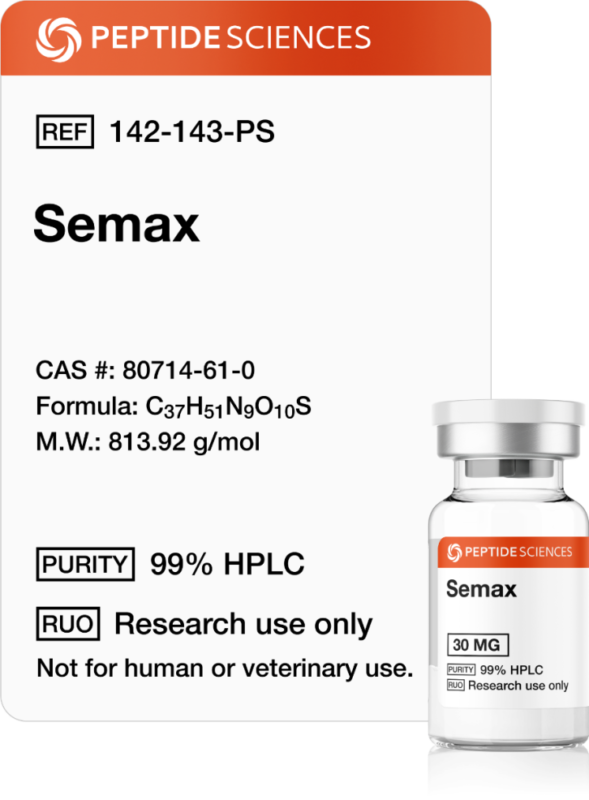
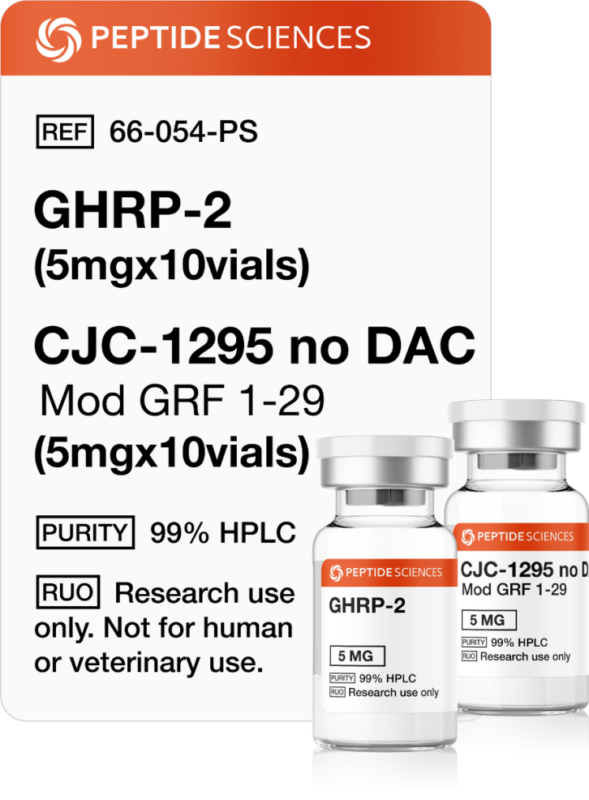
GHRP-2 (5mg x 10), CJC-1295 no DAC (5mg x 10)

GHRP-2 (5mg x 10)

GHRP-2 and CJC-1295 no DAC (Mod GRF 1-29) are synthetic research peptides used together in experimental models to investigate growth hormone axis regulation and somatotropic signaling pathways. GHRP-2 is a potent hexapeptide growth hormone secretagogue that activates the growth hormone secretagogue receptor (GHS-R1a), triggering Gq/PLC-dependent calcium signaling involved in GH release and hypothalamic–pituitary feedback regulation. CJC-1295 no DAC is a stabilized analog of growth hormone–releasing hormone (GHRH 1-29) that selectively activates the GHRH receptor, stimulating adenylate cyclase and cAMP-mediated signaling in pituitary somatotrophs. Preclinical research employs the combined activation of GHS-R1a and GHRH receptors to examine synergistic GH secretion, receptor pharmacology, and endocrine signaling dynamics in controlled laboratory settings. 

For research use only. Not for human consumption. 

References: 
Bowers CY et al., Ann NY Acad Sci, 1998 865:244–249 
Frohman LA et al., Endocr Rev, 2001 22(6):606–648 
Jacks T et al., Endocrinology, 1994 134(2):744–750

BPC-157, TB-500, KPV, GHK-Cu 80mg (Klow Blend)

BPC-157

The Klow Blend combines four research peptides, BPC-157, TB-500, KPV, and GHK-Cu, formulated for studies on cellular repair, immune modulation, and extracellular matrix regulation. BPC-157 is a 15 amino acid gastric peptide fragment that modulates nitric oxide and growth factor pathways. TB-500, a segment of Thymosin Beta-4, regulates actin polymerization and tissue remodeling. KPV, derived from the C-terminal region of alpha-melanocyte-stimulating hormone, modulates NF-κB and cytokine signaling. GHK-Cu, a copper(II)-complexed tripeptide, influences metalloprotein activity and redox balance. Together, these peptides are used in research examining regeneration, inflammation, and peptide–metal interaction mechanisms.

For research use only. Not for human consumption.

References:
Sikiric P et al., Curr Pharm Des, 2018 24(18):2002–2030
Goldstein AL et al., Ann NY Acad Sci, 2007 1112:148–154
Getting SJ et al., J Immunol, 1999 163(10):5959–5967
Pickart L et al., Biochim Biophys Acta, 2015 1850(8):1863–1885

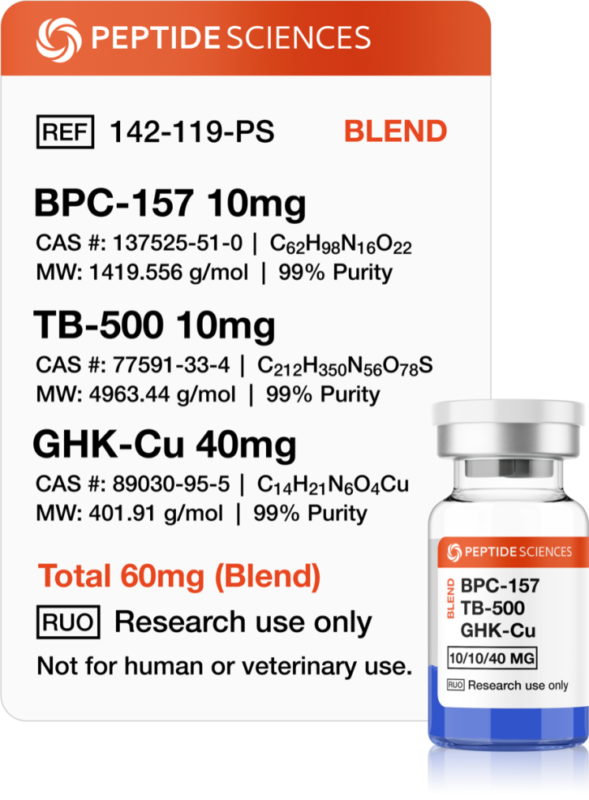
BPC-157, TB-500, GHK-Cu 30mg (Glow Blend)

BPC-157

The Glow Blend combines three research peptides, BPC-157, TB-500, and GHK-Cu, formulated for studies on cellular repair, angiogenesis, and extracellular matrix regulation. BPC-157 is a 15 amino acid gastric peptide fragment that modulates nitric oxide and growth factor pathways. TB-500, a segment of Thymosin Beta-4, influences actin polymerization and tissue remodeling. GHK-Cu is a copper(II)-complexed tripeptide that regulates metalloprotein activity and redox signaling. Together, these peptides are used in research examining molecular regeneration, cytoprotection, and peptide–metal interaction mechanisms.

For research use only. Not for human consumption.

References:
Sikiric P et al., Curr Pharm Des, 2018 24(18):2002–2030
Goldstein AL et al., Ann NY Acad Sci, 2007 1112:148–154
Pickart L et al., Biochim Biophys Acta, 2015 1850(8):1863–1885