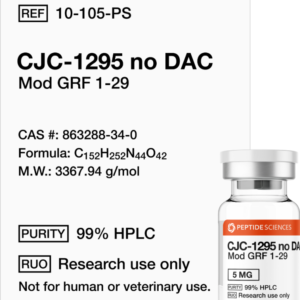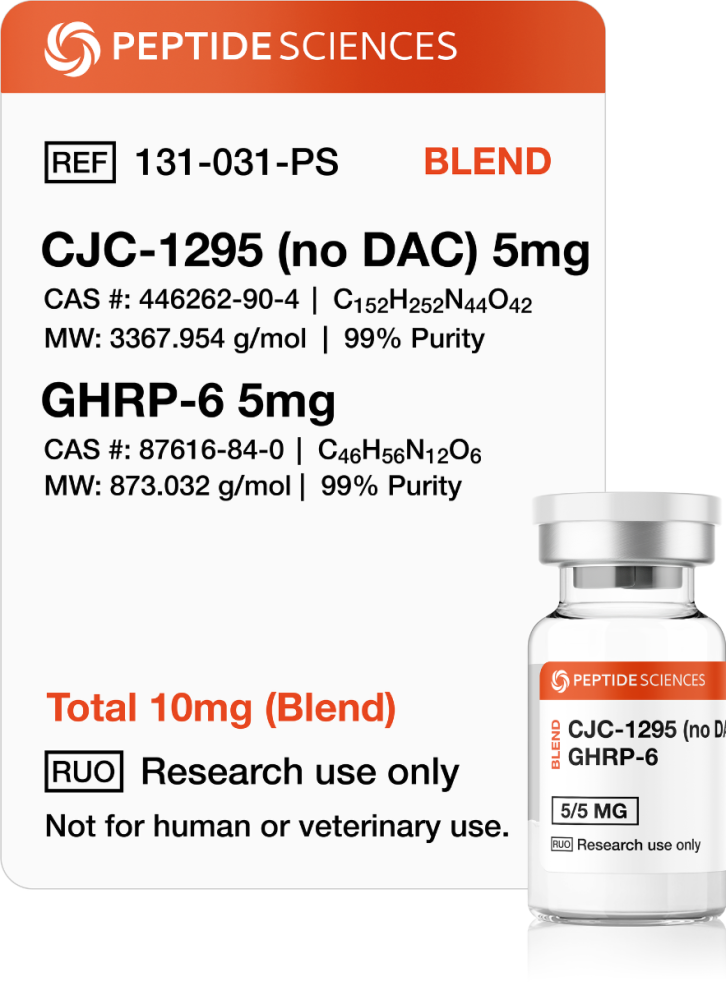
CJC-1295 (no DAC), GHRP-6 10mg (Blend)
$95.00
CJC-1295 (no DAC) and GHRP-6 is a research peptide blend combining GHRH and ghrelin receptor agonists for synergistic GH axis stimulation. CJC-1295 (Mod GRF 1–29) activates cAMP/PKA-mediated GHRH receptor signaling, while GHRP-6 targets GHS-R1a, triggering calcium-dependent secretion. This blend is used in mechanistic studies of peptide receptor cooperation, endocrine feedback, and pulsatile growth hormone release.
For research use only. Not for human consumption.
References:
Bowers CY et al., Endocrinology, 1990 126(2):1165–1171
Teichman SL et al., J Clin Endocrinol Metab, 2006 91(2):479–487
Kojima M et al., Nature, 1999 402(6762):656–660
CJC-1295 (no DAC), GHRP-6 10mg (Blend) – Buy High-Quality CJC-1295 (no DAC), GHRP-6 10mg (Blend) Online
Looking to buy CJC-1295 (no DAC), GHRP-6 10mg (Blend) for your research laboratory? You have come to the right place. We currently have CJC-1295 (no DAC), GHRP-6 10mg (Blend) for sale and it is in stock and ready for immediate shipping. Our CJC-1295 (no DAC), GHRP-6 10mg (Blend) is of the highest purity, making it the best CJC-1295 (no DAC), GHRP-6 10mg (Blend) online for scientific studies.
Product Overview
CJC-1295 (no DAC), GHRP-6 10mg (Blend) is a premium research compound widely utilized in various scientific studies. Researchers seeking to buy CJC-1295 (no DAC), GHRP-6 10mg (Blend) online often prioritize purity and consistency. This compound has been studied extensively for its unique biochemical properties and its role in cellular pathways.
CJC-1295 (No DAC) GHRP-6 10mg Blend
Overview
This product is a laboratory-formulated peptide blend containing CJC-1295 (No DAC; Modified GRF (1–29)) and GHRP-6. The blend is supplied exclusively for research use to support mechanistic investigation of coordinated growth hormone axis signaling via dual receptor engagement: growth hormone–releasing hormone receptor (GHRHR) activation and growth hormone secretagogue receptor (GHSR-1a) activation in preclinical experimental systems.
Biochemical Characteristics
CJC-1295 (No DAC), also referred to as Modified GRF (1–29), is a synthetic GHRH analog derived from the N-terminal 29–amino-acid sequence of endogenous GHRH and incorporates targeted substitutions that increase resistance to proteolytic degradation relative to native GHRH. The “No DAC” variant lacks albumin-binding conjugation, resulting in shorter functional persistence appropriate for studies of transient and pulsatile receptor activation.
GHRP-6 is a synthetic growth hormone–releasing peptide that functions as an agonist of the ghrelin receptor (GHSR-1a). In laboratory models, GHRP-6 is used to characterize secretagogue receptor signaling, including ligand-dependent activation kinetics and downstream intracellular pathway engagement.
Research Applications
This blend is used in preclinical research designs focused on:
- Comparative analysis of GHRHR vs. GHSR-1a receptor activation and downstream signaling output
- Characterization of pulsatile endocrine signaling patterns and receptor cross-talk in pituitary-derived tissues
- Investigation of growth hormone axis feedback regulation and downstream insulin-like growth factor (IGF) pathway markers in animal models
- In-vitro receptor binding, second messenger (cAMP and Ca2 ) assays, and signal transduction profiling under controlled conditions
Pathway / Mechanistic Context
CJC-1295 (No DAC) binds to GHRHR, a class B G protein–coupled receptor, and primarily activates Gs-mediated signaling. This mechanism stimulates adenylate cyclase, increases intracellular cyclic AMP (cAMP), and activates protein kinase A (PKA)–dependent transcriptional programs associated with regulated growth hormone synthesis and secretion in pituitary-derived systems.
GHRP-6 binds to GHSR-1a and is studied for its capacity to activate phospholipase C (PLC) signaling and intracellular Ca2 mobilization. In combined paradigms, researchers evaluate how parallel activation of cAMP-dependent (GHRHR) and Ca2 -dependent (GHSR-1a) pathways modulates endocrine pulsatility, receptor sensitivity, and downstream molecular readouts in preclinical models.
Preclinical Research Summary
Published research has evaluated GHRH analogs and growth hormone secretagogues in non-clinical systems to characterize pulsatile growth hormone secretion, receptor selectivity, and endocrine signaling dynamics. Studies have examined persistence of pulsatile secretion during sustained GHRH analog stimulation as well as mechanistic outcomes associated with ghrelin receptor activation in cellular and animal models. All findings referenced for these peptide classes are derived from preclinical research contexts and are used to inform mechanistic hypotheses and experimental design.
Form & Analytical Testing
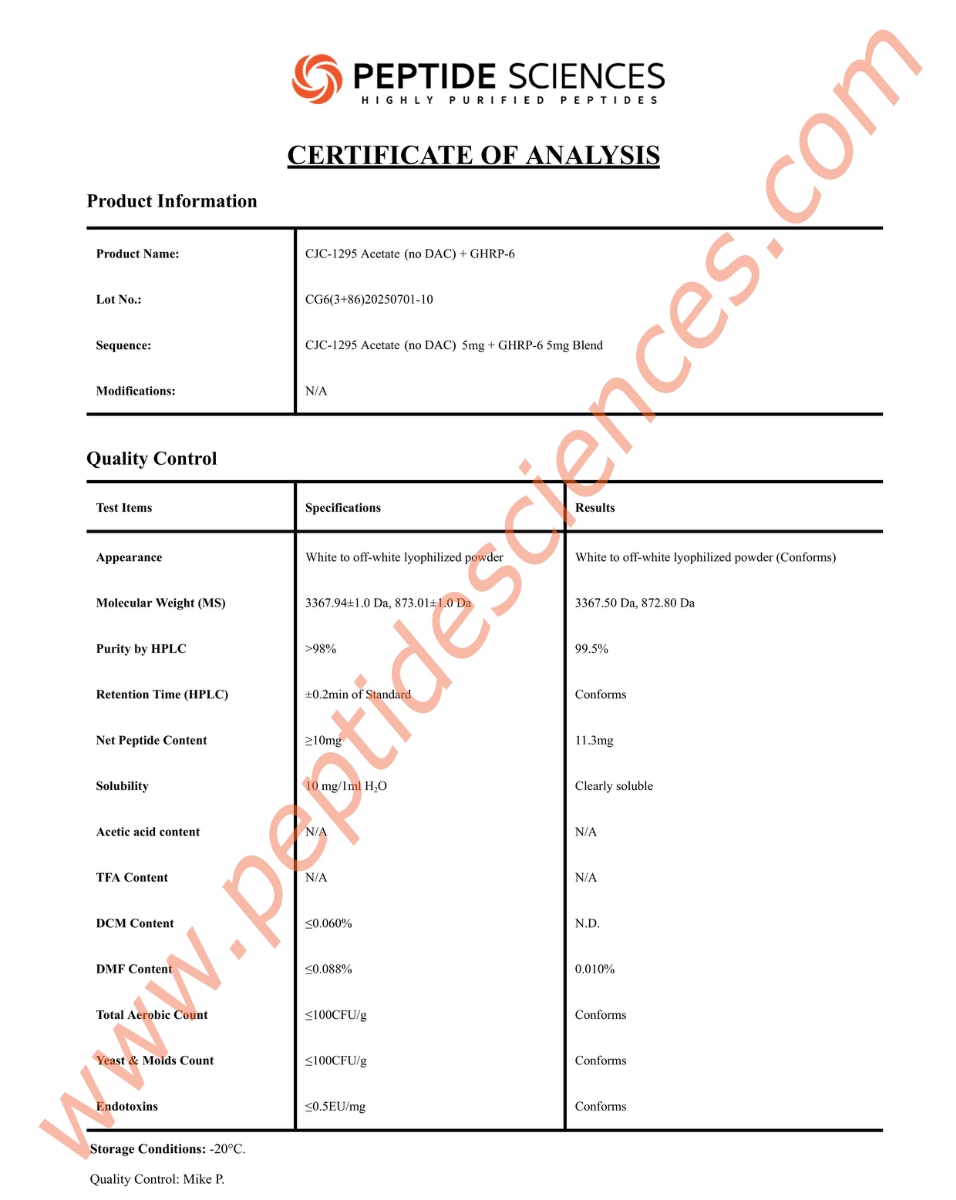
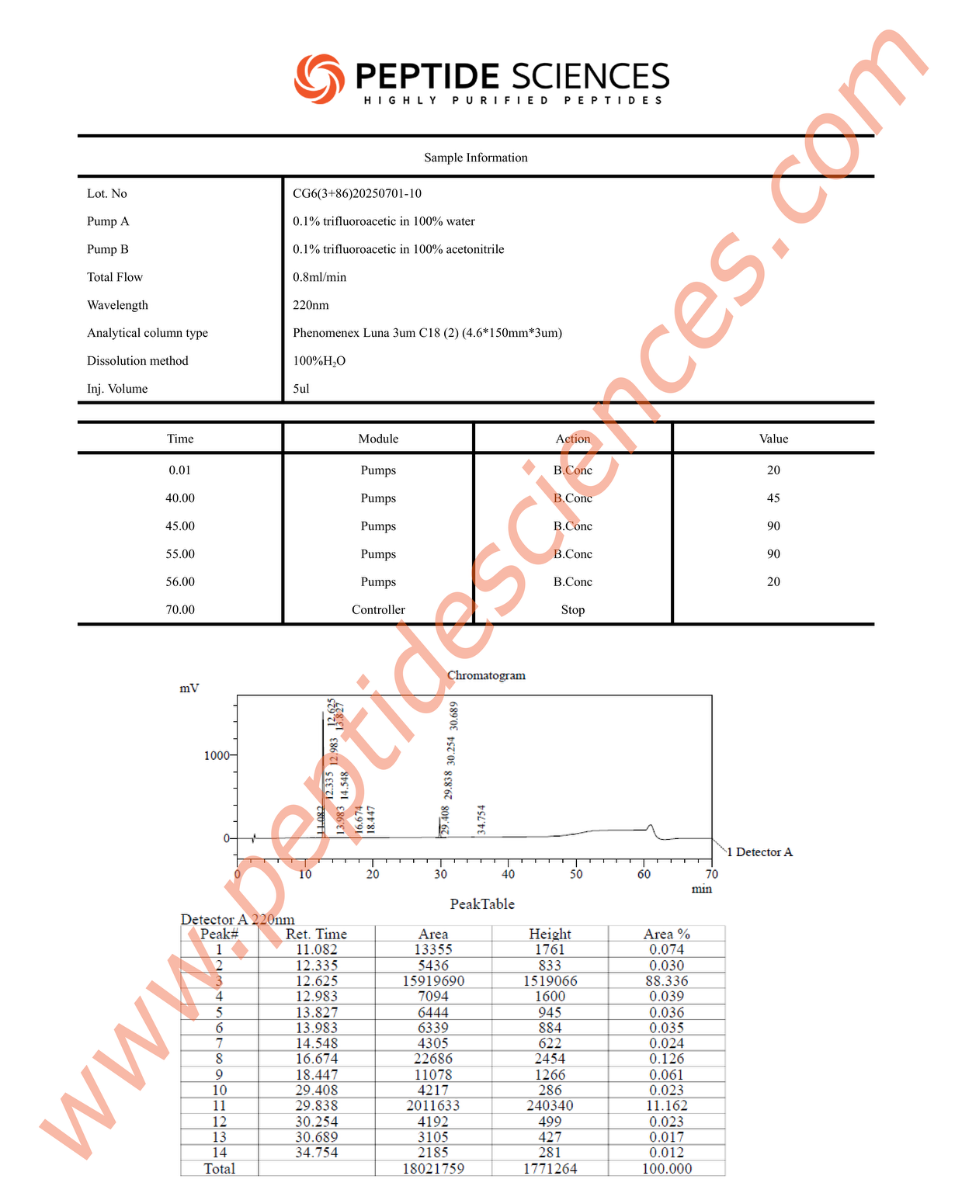
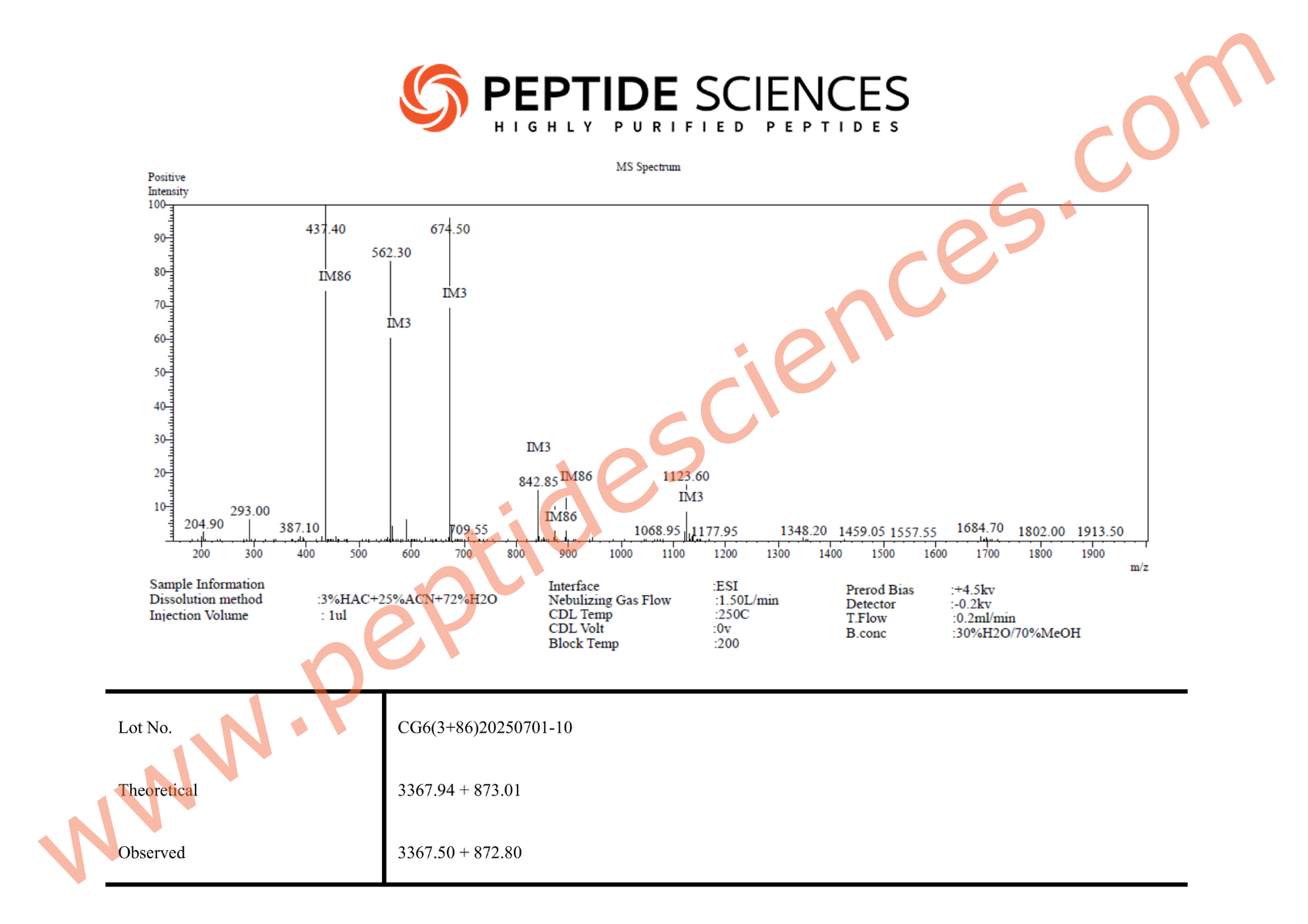
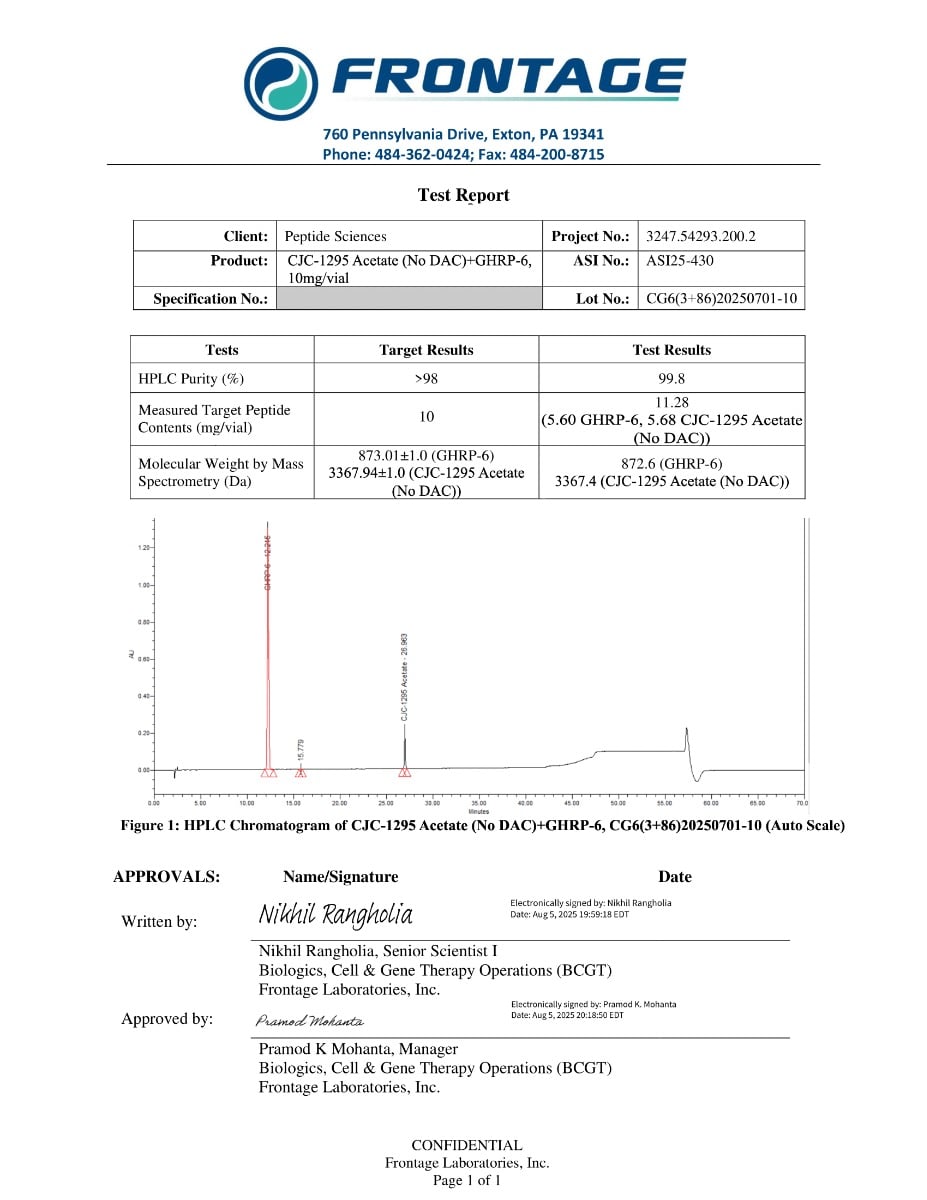
This blend is supplied as a lyophilized peptide preparation intended for laboratory research use. Typical analytical characterization includes high-performance liquid chromatography (HPLC) and mass spectrometry to verify identity, composition, and purity. Where applicable, additional testing may include peptide content verification and assessment of batch-to-batch consistency for experimental reproducibility.
About The Author
The above literature was researched, edited and organized by Dr. E. Logan, M.D. Dr. E. Logan holds a doctorate degree from Case Western Reserve University School of Medicine and a B.S. in molecular biology.
Scientific Journal Author
Márta Korbonits graduated in Medicine in Budapest and undertook her early clinical training at the Internal Medicine Department of the Postgraduate Medical School, Budapest. She joined the Department of Endocrinology at St. Bartholomew’s Hospital under the mentorship of Professors Ashley Grossman and Michael Besser. Her MD and later PhD studies contributed to the understanding of the effects of growth hormone secretagogues on hypothalamic hormone release and the nature and causes of pituitary tumorigenesis. She was awarded an MRC Clinician Scientist Fellowship and commenced studies that produced novel insights into ghrelin physiology and genetics. Her findings related to the regulation of the metabolic enzyme AMPK by ghrelin, cannabinoid and glucocorticoid opened a new aspect of hormonal regulation of metabolism. In 2008, Márta Korbonits was promoted to Professor of Endocrinology and Metabolism and since 2012, has led the Centre of Endocrinology at Barts and the London School of Medicine. In 2016, Márta Korbonits was appointed a Deputy Head of the William Harvey Research Institute. Professor Korbonits continues to integrate human studies alongside with laboratory-based research and has pioneered several projects in translational medicine.
Márta Korbonits is being referenced as one of the leading scientists involved in the research and development of GHRP-6. In no way is this doctor/scientist endorsing or advocating the purchase, sale, or use of this product for any reason. There is no affiliation or relationship, implied or otherwise, between Peptide Sciences and this doctor. The purpose of citing the doctor is to acknowledge, recognize, and credit the exhaustive research and development efforts conducted by the scientists studying this peptide. Márta Korbonits is listed in [7] under the referenced citations.
Referenced Citations
- [1] M. Ionescu and L. A. Frohman, “Pulsatile secretion of growth hormone (GH) persists during continuous stimulation by CJC-1295, a long-acting GH-releasing hormone analog,” J. Clin. Endocrinol. Metab., vol. 91, no. 12, pp. 4792–4797, Dec. 2006. [PubMed]
- [2] S. L. Teichman, A. Neale, B. Lawrence, C. Gagnon, J.-P. Castaigne, and L. A. Frohman, “Prolonged stimulation of growth hormone (GH) and insulin-like growth factor I secretion by CJC-1295, a long-acting analog of GH-releasing hormone, in healthy adults,” J. Clin. Endocrinol. Metab., vol. 91, no. 3, pp. 799–805, Mar. 2006. [PubMed]
- [3] Y. Mendoza Marí et al., “Growth Hormone-Releasing Peptide 6 Enhances the Healing Process and Improves the Esthetic Outcome of the Wounds,” Plastic Surgery International, 2016. [Online]. Available: https://www.hindawi.com/journals/psi/2016/4361702/. [Accessed: 23-May-2019].
- [4] M. Fernández-Mayola et al., “Growth hormone-releasing peptide 6 prevents cutaneous hypertrophic scarring: early mechanistic data from a proteome study,” Int. Wound J., vol. 15, no. 4, pp. 538–546, Aug. 2018. [PubMed]
- [5] H.-J. Huang et al., “The protective effects of Ghrelin/GHSR on hippocampal neurogenesis in CUMS mice,” Neuropharmacology, May 2019. [PubMed]
- [6] N. Subirós et al., “Assessment of dose-effect and therapeutic time window in preclinical studies of rhEGF and GHRP-6 coadministration for stroke therapy,” Neurol. Res., vol. 38, no. 3, pp. 187–195, Mar. 2016. [PubMed]
- [7] Korbonits, Marta, and Ashley B. Grossman. “Growth Hormone-Releasing Peptide and Its Analogues.” Trends in Endocrinology & Metabolism, vol. 6, no. 2, Mar. 1995, pp. 43–49 [PubMed]
ALL ARTICLES AND PRODUCT INFORMATION PROVIDED ON THIS WEBSITE ARE FOR INFORMATIONAL AND EDUCATIONAL PURPOSES ONLY.
The products offered on this website are furnished for in-vitro studies only. In-vitro studies (Latin: in glass) are performed outside of the body. These products are not medicines or drugs and have not been approved by the FDA to prevent, treat or cure any medical condition, ailment or disease. Bodily introduction of any kind into humans or animals is strictly forbidden by law.
RUO Disclaimer
For Laboratory Research Only. Not for human use, medical use, diagnostic use, or veterinary use.
Storage Instructions:
All of our products are manufactured using the Lyophilization (Freeze Drying) process, which ensures that our products remain 100% stable for shipping for up to 3-4 months.
Once the peptides are reconstituted (mixed with bacteriostatic water), they must be stored in the fridge to maintain stability. After reconstitution, the peptides will remain stable for up to 30 days.
Lyophilization is a unique dehydration process, also known as cryodesiccation, where the peptides are frozen and then subjected to low pressure. This causes the water in the peptide vial to sublimate directly from solid to gas, leaving behind a stable, crystalline white structure known as lyophilized peptide. The puffy white powder can be stored at room temperature until you’re ready to reconstitute it with bacteriostatic water.
Once peptides have been received, it is imperative that they are kept cold and away from light. If the peptides will be used immediately, or in the next several days, weeks or months, short-term refrigeration under 4C (39F) is generally acceptable. Lyophilized peptides are usually stable at room temperatures for several weeks or more, so if they will be utilized within weeks or months such storage is typically adequate.
However, for longer term storage (several months to years) it is more preferable to store peptides in a freezer at -80C (-112F). When storing peptides for months or even years, freezing is optimal in order to preserve the peptide’s stability.
Why Choose Our CJC-1295 (no DAC), GHRP-6 10mg (Blend)?
When you are looking for CJC-1295 (no DAC), GHRP-6 10mg (Blend) for sale, quality is paramount. Our products undergo rigorous testing to ensure they meet the strict requirements of laboratory environments. By choosing to buy CJC-1295 (no DAC), GHRP-6 10mg (Blend) from our store, you are guaranteed a product that is:
- High Purity (Tested for 99% )
- Fast Shipping – Always in stock
- Secure Packaging for Research Integrity
- Competitive Pricing for Bulk Orders
Specifications & Technical Data
| Feature | Specification |
|---|---|
| Product Name | CJC-1295 (no DAC), GHRP-6 10mg (Blend) |
| SKU | 23 |
| Purity | >99% |
| Form | Research Grade Compound |
| Availability | In Stock / For Sale |
Scientific Research & Clinical Applications
The research surrounding CJC-1295 (no DAC), GHRP-6 10mg (Blend) is vast. Scientists explore its potential in various metabolic and physiological models. For more detailed scientific data, you can visit PubMed to review the latest peer-reviewed literature regarding this compound.
Frequently Asked Questions
Where can I buy CJC-1295 (no DAC), GHRP-6 10mg (Blend)?
You can buy CJC-1295 (no DAC), GHRP-6 10mg (Blend) directly from our website. We provide a secure checkout and fast shipping to ensure your research stays on track.
Is CJC-1295 (no DAC), GHRP-6 10mg (Blend) in stock?
Yes, we currently have CJC-1295 (no DAC), GHRP-6 10mg (Blend) in stock. Orders are typically processed within 24 hours to ensure rapid delivery to your laboratory.
Related Research Products
If you are interested in CJC-1295 (no DAC), GHRP-6 10mg (Blend), you may also want to explore these related products currently in stock:
Disclaimer: All products listed are for research purposes only. Not for human consumption.
Related products